

Summary
Patriot Home Solutions’ interactive Heat Loss Quiz helps Central New York homeowners figure out why their house feels cold with the heat up. Ten symptom questions rank five likely culprits by confidence: attic bypasses, rim joist, ductwork, window and door air sealing, and envelope penetrations. Windows get blamed first because homeowners can feel them, while the stack effect pulls cold air in low. DIY checks can confirm results, and a blower door test gives a measured number.
| Time to Read | ~6 minutes |
| What You’ll Learn |
|
| Next Steps |
|
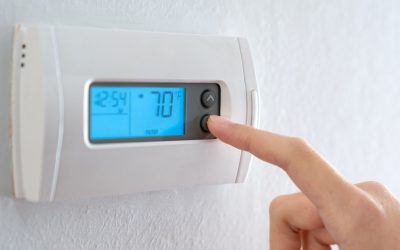
The thermostat in the hallway says 70. The upstairs bedroom in your Camillus colonial doesn’t agree. You’ve nudged the heat up to 72, then 74, and the furnace runs longer, the bill climbs, and that back bedroom still feels closer to 62. If you’ve ever slept in a sweatshirt in a house that’s supposedly warm, you’re not imagining it.
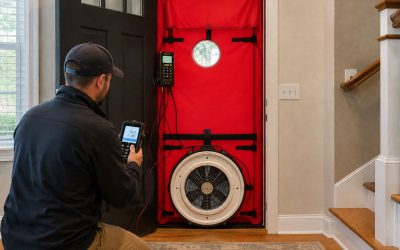
Turning up the heat won’t solve your problem if your furnace isn’t the issue. If your home is losing heat faster than it can hold onto it, having a professional perform a blower door test can show you where that air is leaking from. It’s one of the quickest ways to identify leaks that can affect both your comfort and heating costs.
Why We Blame the Window First

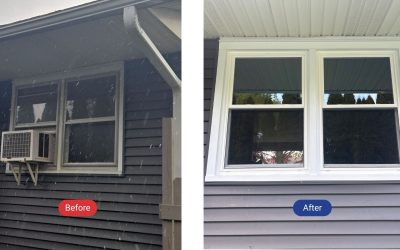
When a room feels cold, the window is usually the first place we think to check. And it’s easy to see why. The glass can feel cold to the touch, and on a windy night, you may even notice air coming through the sash. It’s an obvious spot to notice a problem, even when the window isn’t where most of the heat is actually being lost.
The bigger losses tend to hide where you never go. Your attic and your rim joist (the band of framing that sits on top of your foundation’s walls) can leak far more air than a window, and neither gives you anything to feel from the living room.
EPA estimates that homeowners can save an average of 15% on heating and cooling costs by air sealing and adding insulation in attics, floors over crawl spaces, and accessible basement rim joists. Windows aren’t on that list.
This is especially noticeable in Central New York. Syracuse’s median home was built around 1958, well before modern energy codes, and many homes in the area have years of settled insulation and small gaps that were never properly sealed.
If you’ve already compared your heating bill with similar Central New York homes and landed on the high end, this is often where the gap comes from.
Take the Heat Loss Quiz
Answer 10 questions about what you notice around your house. There are no wrong answers, and “not sure” is always an option. Your results rank five common culprits by how likely they are based on your symptoms, with a diagram showing where each one sits in your home.
What Your Results Mean
Your results rank five possible culprits, and each one is given a “Likely”, “Possible”, or “Less likely” label. There’s no single verdict because the same symptom can have more than one cause. A cold upstairs bedroom, for example, could be caused by air leaks in the attic, ductwork losing heat on the way there, or a combination of both. The quiz can help point you in the right direction, but it can’t measure what’s happening in your home. Think of the results as a starting point for figuring out where to look first.
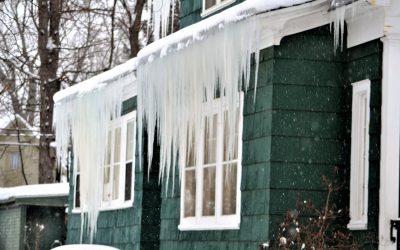
- Attic bypasses: gaps around recessed lights, plumbing stacks, attic hatches, and the tops of interior walls that let warm air flow straight into the attic. If you also see icicles every winter, this is likely part of the story.
- Rim joist: the framing that sits on your foundation, which is one of the leakiest spots in many older CNY basements.
- Ductwork: ducts running through unheated attics, basements, or crawlspaces can lose heat before it ever reaches the room. If your furnace short-cycles, it’s worth having an HVAC technician check it too, since an oversized furnace, a clogged filter, or a poorly placed thermostat can cause the same symptom.
- Window and door air sealing: worn weatherstripping, failed seals, and frames that have shifted after decades of freeze-thaw cycles.
- Envelope penetrations: every outlet, switch, pipe, dryer vent, and cable line that passes through an exterior wall is a potential leak.
How Warm Air Escapes Through the Top of Your House
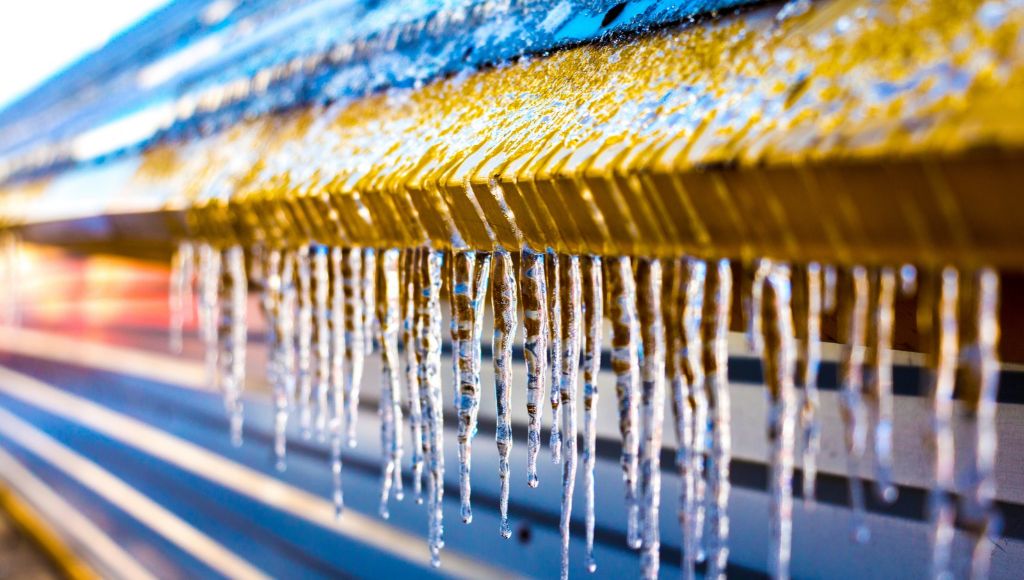
Your house behaves a lot like a chimney. Warm air rises, and in a leaky house it keeps rising right through gaps in the top-floor ceiling and into the attic. That air has to be replaced, so the house pulls cold outdoor air in down low, through the rim joist, the basement, and the first floor. Building scientists call this the stack effect.
It’s also why fixes don’t always happen where you’d expect. Sealing the attic often warms up a cold basement, because once warm air stops escaping at the top, less cold air gets pulled in at the bottom. Icicles on the roof and a chilly basement floor can share the same cause. The effect gets stronger as the temperature outside drops, which is why you’ll feel it most in a Syracuse January.
DIY Checks You Can Run This Weekend
These won’t replace a real audit, but they’re a good way to confirm what your quiz results suggest.
The Incense Stick Test
Pick a cool, windy day and close all windows and doors. Turn on your bathroom fans and range hood at the same time, which pulls air in through leaks and makes them easier to spot (skip this if a fireplace or wood stove is burning). Hold a lit incense stick near outlets, switch plates, window and door trim, the attic hatch, and the top of your basement walls. If the smoke pulls sideways or flutters, you’ve found a leak. Keep it away from curtains and other flammable materials.
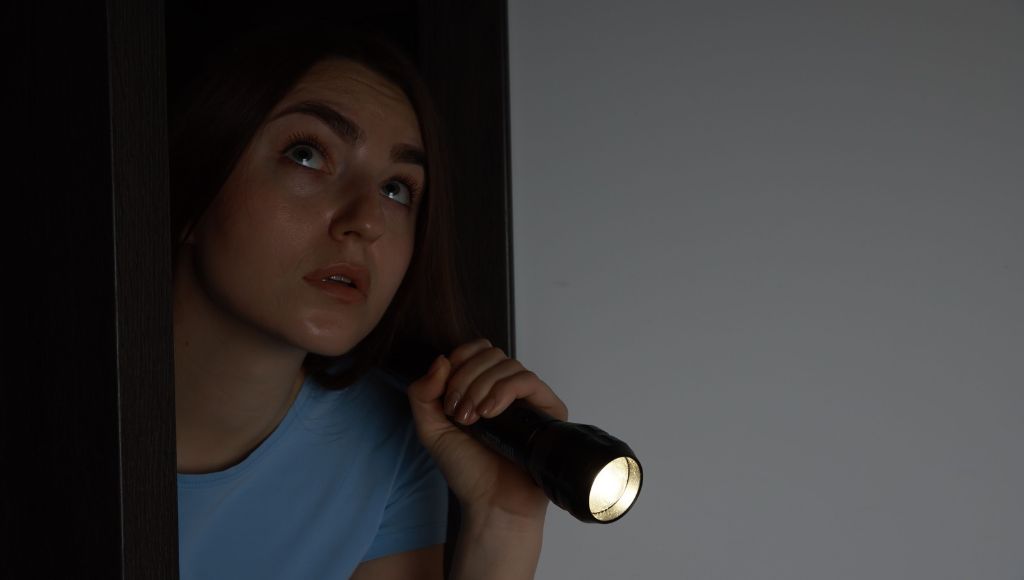
The Flashlight Test
After dark, have someone shine a flashlight around the edges of a closed door or window from inside the house while someone else watches for the light from outside. If light gets through, so does air.
The Attic and Basement Look
- Dark or dirty patches on attic insulation, which show where air has been filtering through it
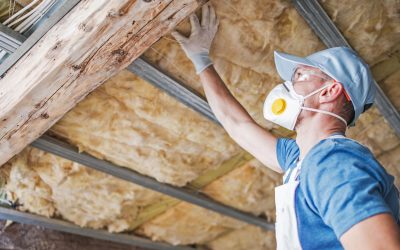
- Insulation that’s flattened or sits below the tops of the attic floor joists
- Gaps or daylight at the top of basement walls where the framing meets the foundation
These checks find the leaks you can reach and see. They won’t find the ones inside walls, under floors, or buried in attic insulation, and those are often the ones that matter most.
| One safety note: if your attic insulation looks like small gray-brown pebbles, it may be vermiculite, which can contain asbestos. Don’t disturb it. |
What a Blower Door Test Shows That a Quiz Can’t
A blower door test turns guesses into a number.
A technician mounts a powerful fan in an exterior doorway, lowers the air pressure inside your home, and measures how much outside air leaks in. The result is your air changes per hour at 50 pascals (ACH50), which tells you how many times the air in your house is replaced each hour under test pressure.
With the house depressurized, those leaks are much easier to spot. A thermal camera can reveal cold air coming through places like a rim joist or attic hatch, showing you where heat is escaping instead of leaving you to guess.
The real value is a fix list in the right order. If the attic is the problem, you’ll know before you spend money on windows. If your windows really are the weak point, you’ll know that too.
Book a Blower Door Test and Get Your Number
Your quiz results point you in a direction. A blower door test from Patriot Home Solutions gives you the actual number and shows exactly where your home is losing heat. We test homes in Syracuse, Liverpool, Camillus, Utica, and communities across Central New York, and we’ll check your eligibility for NYSERDA Comfort Home and EmPower+ incentives during the same visit, so you know what help is available before you decide on any work. Contact us today for a free quote.